Speed to Lead Statistics India: Why Every Minute Counts for SMBs
New insights reveal Indian businesses experience significant lead decay if not contacted rapidly. Learn how fast follow-up can boost conversions by 3x.


In the competitive Indian market, the speed at which you respond to a new lead directly dictates your chances of conversion. Businesses that contact leads within minutes see significantly higher qualification and conversion rates. Across OpsLoop workspaces, we typically observe that a rapid follow-up, often within OpsLoop's 60-second enquiry-to-call SLA, is crucial to prevent lead decay and maximize your return on ad spend.
Ignoring speed to lead means you're leaving money on the table, letting competitors snatch away your hard-earned enquiries, and effectively burning a hole in your advertising budget. This isn't just about being polite; it's about fundamental business economics in a hyper-connected, WhatsApp-first India.
The Critical Window: Why Every Minute Counts
The concept of "lead decay" is simple: the longer you wait to contact a lead, the colder they become. In India, where consumers are used to instant gratification and often inquire with multiple businesses simultaneously, this decay happens rapidly.
Think about it: a potential customer fills out a form or sends a WhatsApp message about a coaching class, a real estate property, or a loan. They are in research mode, actively seeking information. If you don't respond quickly, they'll simply move on to the next option.
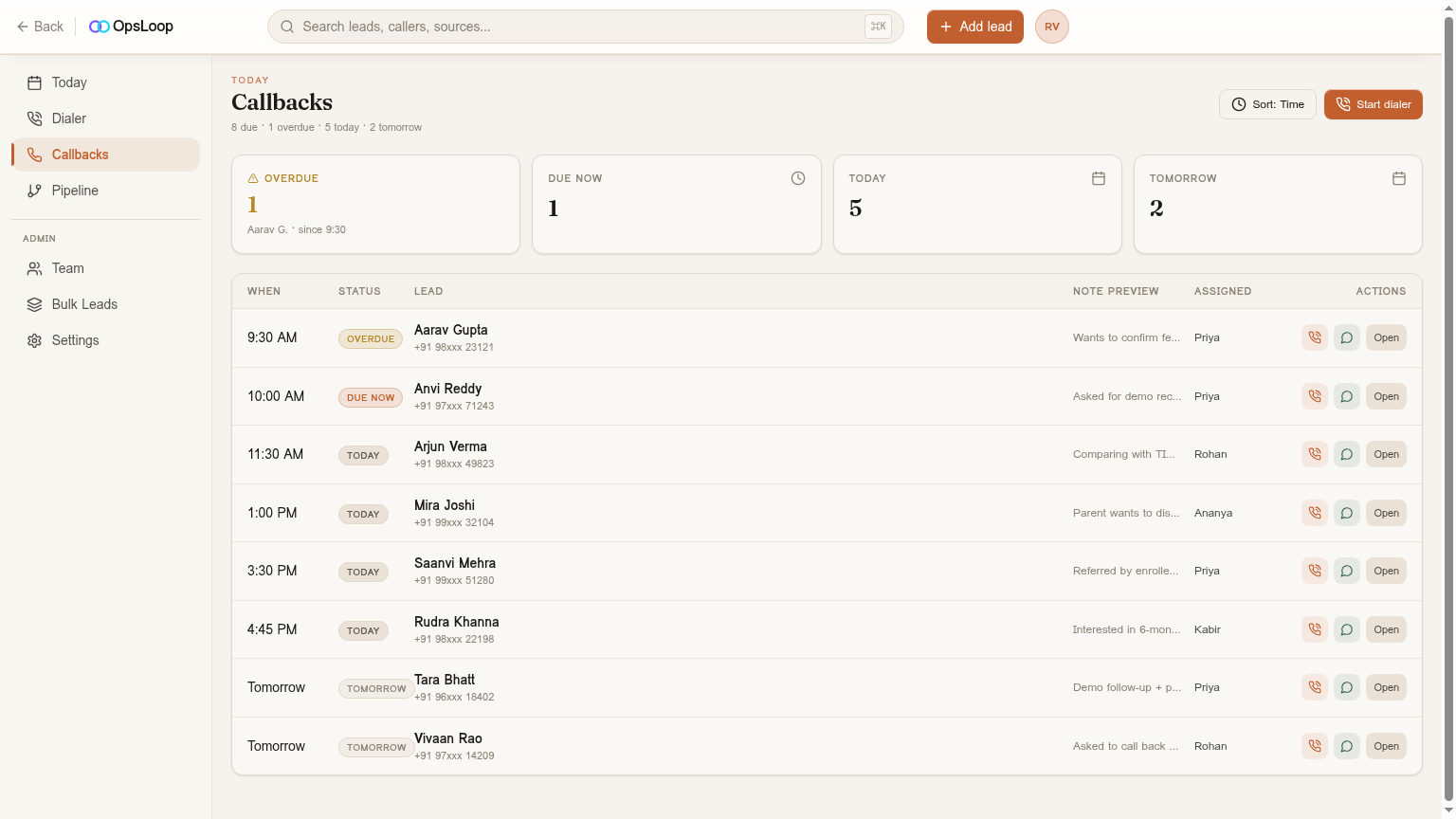
Illustrative scenario modeled on typical results seen across OpsLoop workspaces; names and details changed.
We consistently see that the first 5-10 minutes after a lead comes in are the most critical. Contacting a lead within this window can dramatically increase your chances of engaging them, qualifying their interest, and moving them down your sales pipeline. Delaying even by 30 minutes can lead to a substantial drop in engagement and a significant decrease in conversion potential. Your leads don't wait for you; they move on.
What to do about it:
- Instant Notifications: Ensure your sales team gets an immediate alert (via CRM, WhatsApp, or SMS) the moment a new lead arrives.
- Pre-qualified Leads: If possible, use forms that gather just enough information to allow for a personalized, quick first contact.
- Dedicated Lead Ownership: Assign leads instantly to a specific team member who is responsible for the rapid follow-up.
WhatsApp: The Indian Lead's Preferred Channel for Speed
In India, WhatsApp isn't just an app; it's how business gets done. For lead management, it's your fastest lane to a hot lead. Unlike emails that sit unread or calls that go unanswered, a well-timed WhatsApp message has a much higher chance of being seen and responded to almost immediately.
Leveraging WhatsApp for your initial lead contact means meeting your customers where they are most comfortable. It allows for a less intrusive, yet highly personal, first touchpoint. This is especially true for businesses targeting customers in Tier-2 and Tier-3 cities, where WhatsApp penetration is immense.
However, manually handling hundreds of WhatsApp inquiries is impossible. This is where an API-based WhatsApp solution integrated into your CRM becomes indispensable. You can send automated, approved templates as a first response, acknowledge their inquiry, and even gather more details, all while your sales team prepares for a personal follow-up.
What to do about it:
- Integrate WhatsApp API: Use a CRM that integrates with WhatsApp Business API to enable automated, template-based first responses. Tools that enable WhatsApp automation for business are no longer a luxury but a necessity.
- Pre-approved Templates: Have a library of approved, personalized WhatsApp templates ready for different lead sources or inquiry types. This ensures consistency and speed.
- Human Touch Follow-up: While automation starts the conversation, ensure a human takes over quickly to build rapport and address specific queries.
The Conversion Advantage: Faster Response, More Sales
Connecting with a lead while their interest is peaked doesn't just prevent them from going to a competitor; it actively increases your conversion rates. When you respond quickly, you demonstrate efficiency, professionalism, and a genuine interest in their needs. This builds trust and positions you as a responsive, reliable business from the very first interaction.
For instance, in a coaching case study, businesses using OpsLoop saw a significant +34% demo show-up rate by ensuring rapid follow-up. This isn't a small gain; it translates directly into more qualified prospects attending demos and, ultimately, more enrollments or sales.
Faster response times lead to:
- Higher Engagement: Leads are more likely to respond and engage in a conversation.
- Better Qualification: You can qualify leads while their needs are fresh in their minds, filtering out less serious inquiries.
- Stronger First Impression: You establish a professional and responsive image.
- Increased Trust: Quick service builds confidence in your brand.
What to do about it:
- Track Response Times: Implement a CRM that automatically logs when a lead comes in and when the first contact is made. This data is gold.
- Set SLAs: Establish clear Service Level Agreements (SLAs) for your sales team regarding lead response times.
- Incentivize Speed: Consider rewarding team members who consistently meet or exceed speed-to-lead targets.
The Hidden Cost of Delay: Your Ad Spend Leak
Every lead you generate costs money, whether through Google Ads, Meta Ads, or other marketing channels. If you're spending ₹400 per lead, and 70% of those leads go cold because of slow follow-up, you're effectively wasting ₹280 on each of those cold leads. This delay translates directly into a significant lead revenue leak that eats into your profits.
Many Indian businesses invest heavily in generating leads but fail to optimize the crucial last mile: converting them. A slow response time is one of the biggest reasons Indian SMBs leak 40% of their leads, turning potential customers into lost revenue.
Consider a real estate developer running ads for new properties. Leads from property portals are often shared with multiple agents. The agent who calls first, sends a property brochure on WhatsApp, and schedules a site visit promptly has a far greater chance of closing the deal. The others, despite paying for the same lead, are simply out of luck.
What to do about it:
- Implement a Leak Audit System: Use a CRM feature that flags leads that haven't been contacted within your defined SLA or have gone cold.
- Calculate ROI on Speed: Understand how much revenue you gain for every minute shaved off your response time.
- Review Lead Sources: Analyze if certain lead sources consistently have faster response times or higher decay rates, and adjust your strategy accordingly.
Automating Speed: The OpsLoop Way
Manually managing lead follow-up across multiple channels (calls, WhatsApp, email) is a recipe for disaster, especially as your business grows. Human error, busy schedules, and lack of real-time visibility inevitably lead to delays and missed opportunities. This is where a specialized CRM for lead management in India becomes a necessity.
OpsLoop (that's us) is designed to help Indian businesses achieve optimal speed to lead through automation and streamlined workflows. Our platform ensures that every inquiry gets the attention it needs, when it needs it.
Here’s how OpsLoop helps you master speed to lead:
- One Inbox: All inquiries from various sources (forms, WhatsApp, email, calls) land in a single, unified inbox, ensuring no lead is missed. Your team has full context of every interaction.
- Auto-dialer: With one-tap dial functionality and auto-logging of call outcomes, your sales team can quickly move through their call lists, ensuring faster contact and consistent follow-up.
- WhatsApp Automation: Send instant, approved WhatsApp templates as a first response. Set up automated follow-up sequences that engage leads even when your team is busy, keeping the conversation warm.
- Leak Audit: OpsLoop's unique Leak Audit feature proactively alerts owners to cold leads or missed follow-ups, ensuring accountability and plugging revenue leaks before they become critical.
- Owner Dashboard: Get real-time insights into your team's response times, conversion rates, and lead source ROI, allowing you to identify bottlenecks and optimize your process for maximum speed.
For instance, coaching institutes can see a dramatic improvement in batch fill rates by ensuring every admission inquiry is contacted within minutes, moving them from interest to enrollment much faster. Similarly, real estate businesses can ensure every portal lead is routed and followed up on before a competitor gets a chance.
If you're looking to streamline your lead processes and ensure no lead slips through the cracks, exploring a dedicated CRM for Small Business India is crucial. It’s not just about managing leads; it’s about converting them faster.
Key Stats
- OpsLoop Enquiry-to-Call SLA: 60 seconds
- Demo Show-up Rate Increase: +34% (with rapid follow-up in coaching case study)
- Typical Lead Leakage (due to slow follow-up): Significant portion of ad spend
- Impact of 5-10 Minute Response: Dramatically higher lead qualification and conversion
Speed to lead is not just a metric; it's a strategic advantage in the Indian market. By prioritizing rapid, personalized follow-up, especially via WhatsApp, and leveraging automation, you can transform your lead management from a leaky bucket into a high-converting pipeline.
Ready to stop losing leads to slow follow-up and boost your conversions? See how OpsLoop can help your business achieve a 60-second enquiry-to-call SLA and streamline your lead operations.
Further reading
FAQ
Frequently asked
What is 'speed to lead'?
Speed to lead refers to the time taken by a business to contact a new lead after they express interest, such as filling out a form or sending a WhatsApp message. In India, a fast response is critical due to high competition and instant communication expectations.
Why is speed to lead so important for Indian businesses?
In India's competitive landscape, potential customers often inquire with multiple businesses simultaneously. The first business to engage them effectively often wins the deal. Delayed responses lead to cold leads, wasted ad spend, and lost opportunities.
What is considered a good speed to lead time in India?
Ideally, you should aim to contact a new lead within 5-10 minutes. Research consistently shows that the chances of qualifying a lead drop dramatically after this initial window. OpsLoop, for instance, aims for a 60-second enquiry-to-call SLA.
How can I improve my speed to lead?
Implementing a CRM with automated lead routing, instant notifications, auto-dialers, and WhatsApp automation is key. Pre-approved WhatsApp templates and quick call scripts can also significantly reduce response times.
Does WhatsApp play a role in speed to lead for Indian businesses?
Absolutely. WhatsApp is the primary communication channel for most Indians. Leveraging WhatsApp for immediate, personalized follow-ups through automated sequences and quick replies is vital for achieving optimal speed to lead.
What are the consequences of slow lead response times?
Slow response times lead to high lead decay, meaning leads go cold and become unresponsive. This directly translates to wasted marketing budget, lower conversion rates, and ultimately, reduced revenue and growth for your business.
READ NEXT
The Silent Metric Every Coaching Institute Tracks Wrong (Or Not at All)
Most coaching institutes either ignore or miscalculate lead-to-enrollment conversion rate. Here's how to measure it corr…
The ₹8 Lakh Leak Between Your Ad Account and Your Enrollment Sheet
Most coaching institutes hemorrhage ₹5-₹20 lakhs annually because of ops gaps between ad spend and enrollment. Here's th…
The 48-Hour Window: Why Coaching Leads Go Cold So Fast
Your students abandon you while you're still loading their form data. Track the 48-hour decay window and reclaim lost re…
Try OpsLoop free for 14 days
Flat team plans from ₹3,000/month. No per-seat fees. No card to start.